
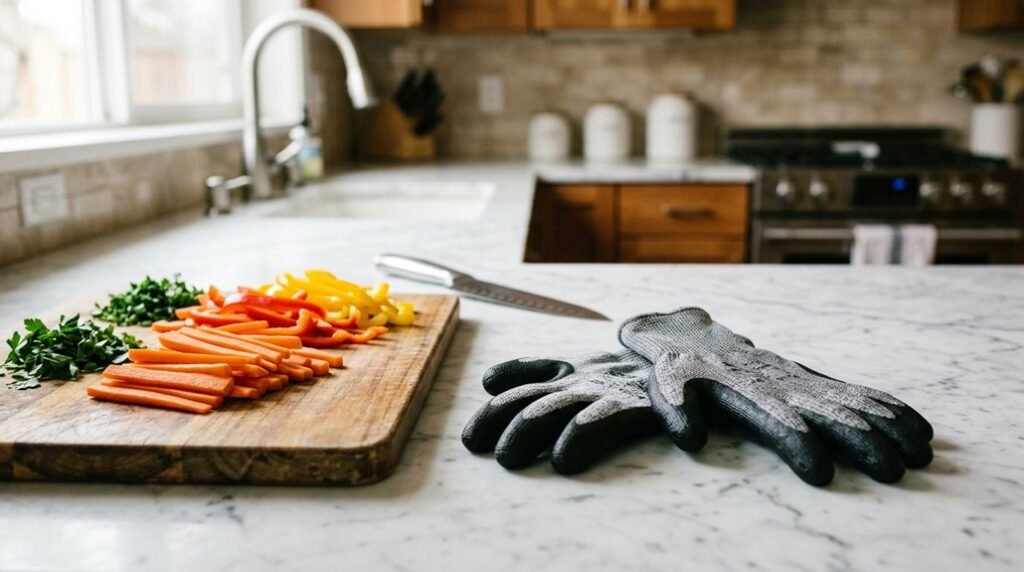
I’ll help you select kitchen cutting gloves that genuinely protect your hands without sacrificing dexterity.
Whether you’re prepping vegetables or tackling light DIY projects, finding the right pair means balancing cut resistance level, comfort, and practicality.
The options I’m about to walk you through offer something different, and understanding what sets them apart will help you make a choice that fits your specific needs.
NoCry Premium Cut Resistant Food Grade Gloves

4X MORE CUT-RESISTANT THAN LEATHER — Safety gloves made from the highest level of cut resistant material on the market. These mandolin gloves cut prooft are 4X better at...
If you’re serious about kitchen safety, the NoCry Premium Cut Resistant Food Grade Gloves deserve your attention. These Level 5 rated gloves offer 4X more cut resistance than leather, making them ideal for mandolines, oyster shucking, and vegetable prep.
The polyethylene, spandex, and fiberglass blend keeps your hands dry while maintaining excellent dexterity. Machine washable and ambidextrous, they work for both left and right-handed cooks. You’ll barely notice you’re wearing them during daily kitchen tasks. The food-safe certification means you can confidently handle raw ingredients without concern.
With a limited lifetime warranty covering material defects, you’re investing in reliable protection that’ll last through countless meal preparations.
Best For: Chefs, butchers, and home cooks who work frequently with sharp kitchen tools like mandolines, knives, and oyster shuckers and want reliable cut protection without sacrificing dexterity or comfort.
Pros:
- Exceptional cut resistance (Level 5 rated, 4X more protective than leather) reduces risk of nicks and slices during food preparation
- Lightweight, breathable design with excellent dexterity maintains comfort and grip during extended use, making them suitable for detailed kitchen tasks
- Food-safe certification, machine washable, and ambidextrous design offer versatility and easy maintenance for prolonged everyday kitchen use
Cons:
- Non-waterproof material limits use in wet environments or extended water exposure
- Limited lifetime warranty excludes normal wear and accidental damage, which may limit coverage for heavy-duty kitchen use
- Sizing and fit may require careful selection to ensure snug fit for optimal protection and comfort
THOMEN Cut Resistant Gloves Level 5 Protection Kitchen

Protect Your Hand - Throw away the normal gloves and try to use our THOMEN cut resistant gloves. It is made from level 5 cut resistant material, protect your hands from...
The THOMEN Cut Resistant Gloves are built for anyone who handles sharp tools regularly, whether you’re prepping meals in a professional kitchen, carving wood in your garage, or working with mandoline slicers at home. This four-piece set offers Level 5 cut resistance, meaning you get serious protection without sacrificing comfort.
The polyethylene and glass fiber blend creates a breathable, elastic fit that moves with your hands. You’ll appreciate the excellent grip that works whether you’re handling wet fish or dry wood. Cleanup is straightforward: machine wash or hand wash when needed. Beyond the kitchen, they’re perfect for oyster shucking, yard work, and handling broken glass safely.
Best For: Anyone who regularly handles sharp tools in professional kitchens, home cooking, wood carving, or DIY projects and needs reliable hand protection without compromising on comfort and dexterity.
Pros:
- Level 5 cut resistance provides serious protection against sharp objects like knives, mandoline slicers, and broken glass
- Breathable, elastic polyethylene and glass fiber blend ensures comfortable all-day wear with excellent grip in both wet and dry conditions
- Easy maintenance with machine wash or hand wash capability, plus dishwasher compatibility for convenient cleaning and long-term durability
Cons:
- Only comes as a four-piece set, which may be more than some users need or result in unused pairs
- Protection level is limited to Level 5, which may not be sufficient for extremely hazardous cutting environments requiring higher-grade protection
- Imported product with potential shipping times and no mention of warranty coverage for defects or performance issues
Schwer SlicePro ANSI Cut Resistant Gloves (PR1501-G)

Cut Resistant - Constructed with ultra-high-strength fibers and stainless steel, these A9 cut resistant gloves are designed to reduce the risk of cuts during food-handling...
You’ll want the Schwer SlicePro gloves if you’re serious about protecting your hands during repetitive cutting tasks. These A9-rated gloves combine HPPE fibers with stainless steel wire for serious cut resistance without the bulk or discomfort.
What sets them apart is their food-grade certification, meaning you can handle raw fish, meat, and produce directly without worry. The knit construction feels lightweight and breathable for extended wear, while the ambidextrous design works for either hand. Machine washable and reusable, they’re practical for professional and home kitchens alike. The wing thumb design ensures a secure fit during mandoline work, oyster shucking, and filleting tasks.
Best For: Professional chefs, home cooks, and food prep workers who need reliable hand protection during repetitive cutting tasks like mandoline slicing, meat cutting, and fish filleting.
Pros:
- A9-level cut resistance with stainless steel wire provides excellent protection without bulk or discomfort
- Food-grade certified and machine washable, making them hygienic and reusable for regular use
- Lightweight knit construction with ambidextrous fit and wing thumb design ensures comfort and secure grip during extended wear
Cons:
- No puncture protection, limiting effectiveness against piercing hazards
- Single glove per unit may require purchasing multiple pairs for occasional users
- Cut resistance is excellent but not absolute—requires proper handling technique to prevent injuries
Dowellife Cut Resistant Food Grade Safety Gloves Level 5

Protect your hand from cuts and abrasions---The high performance cut resistant material HDPE is adopted and the gloves is awarded with the highest EN388:2003 level 5...
Are you slicing, shucking, or butchering without adequate hand protection? The Dowellife Cut Resistant Food Grade Safety Gloves Level 5 offer serious defense for your kitchen work. These gloves feature HDPE material that’s ten times stronger than standard gloves, backed by EN388:2003 level 5 and EN388:2016 Level C certifications.
At just 50 grams with a snug nylon blend fit, you’ll appreciate the flexibility for precise knife work without sacrificing protection. The 1.5mm thickness gives you reliable durability, while the 8-inch length provides solid coverage. Hand or machine wash them like any kitchen cloth, hang to dry, and you’re ready for your next shift. One glove, countless cutting tasks.
Best For: Chefs, butchers, oyster shuckers, and home cooks who need reliable cut protection while performing precise knife work in the kitchen.
Pros:
- HDPE material is 10 times stronger than normal gloves with EN388:2003 Level 5 and EN388:2016 Level C certification for dependable protection
- Lightweight at 50 grams with flexible nylon blend fit allows for precise, dexterous knife work without compromised mobility
- Reusable and easy to maintain with hand or machine washable design, making them economical and hygienic for repeated kitchen use
Cons:
- Available only in Large size, which may not accommodate users with smaller hands requiring a different fit
- Single glove per pack means users need to purchase multiple packs if they prefer to have backup pairs readily available
- 1.5mm thickness, while durable, may reduce some tactile sensitivity compared to thinner glove alternatives
Evridwear Cut Resistant Food Grade Kitchen Gloves (Medium)

Quality That Worth The Money: Made from high performance Polyethylene (HPPE) glass fibers – 10 times stronger than leather, which are knitted together tightly to prevent...
Want maximum protection without sacrificing comfort or food safety in your kitchen? I’d recommend Evridwear’s Level 5 cut-resistant gloves, which deliver serious protection through high-performance polyethylene and glass fibers. These lightweight knit gloves work brilliantly for slicing, shucking, and carving tasks, and they’re certified EN 388 and food-safe, so you can handle raw ingredients confidently.
The medium size fits comfortably for extended wear, and since they’re machine washable, you’ll appreciate the reusable durability. Available in pink, green, or gray, these gloves prove that protective kitchen gear doesn’t require compromising on either safety standards or everyday practicality.
Best For: Home cooks, professional chefs, and anyone handling sharp kitchen tools who needs ANSI Level 5 cut protection without compromising on comfort or food safety.
Pros:
- ANSI Level 5 certification provides the highest level of cut resistance available, offering maximum protection during food prep and other hazardous tasks
- 100% food-safe and non-toxic materials make these gloves ideal for direct contact with raw ingredients without contamination concerns
- Machine washable and reusable design provides excellent long-term value and convenience compared to disposable alternatives
Cons:
- Limited to knit construction without waterproof resistance, which may be inconvenient for extended wet tasks or when handling very moist ingredients
- Available only in medium and three other specific sizes, potentially limiting options for those with non-standard hand measurements
- Designed primarily for cut protection rather than heat resistance, making them unsuitable for handling hot cookware or surfaces
Factors to Consider When Choosing Kitchen Cutting Gloves
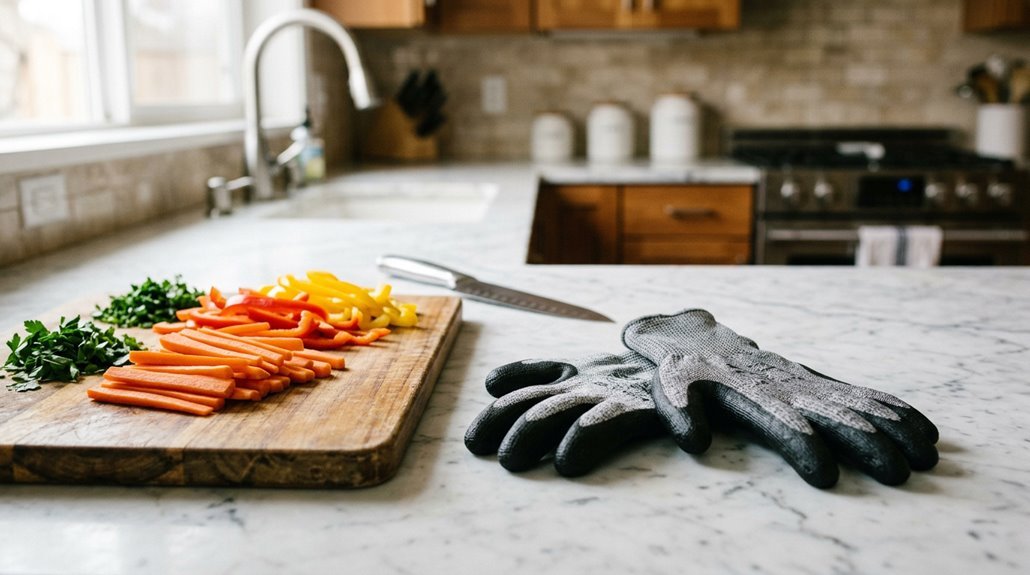
When you’re shopping for kitchen cutting gloves, I want you to focus on five key factors that’ll make a real difference in your safety and satisfaction: the cut resistance level rating (which tells you how well they protect against sharp blades), the material composition quality (because what they’re made from affects both protection and feel), the comfort and fit design (since gloves you won’t wear don’t protect anyone), food safety certification standards (your assurance they’re actually kitchen-safe), and durability plus reusability (because you want them to hold up through multiple washes). Each of these elements plays its own role in whether you’re getting gloves that’ll genuinely serve you well or just sit in a drawer. And here’s the thing: the best choice isn’t always the most expensive one, but rather the one that balances all these factors to match how you actually cook and what your hands need.
Cut Resistance Level Rating
How do you know if your gloves will actually protect your fingers when you’re working with sharp blades and dangerous kitchen equipment? The answer lies in cut resistance level ratings, which are standardized systems like ANSI/ISEA and EN388 that quantify protection on a scale. Level 5 represents the highest rating in most glove systems and indicates your gloves can withstand demanding tasks like meat cutting and mandoline slicing, markedly reducing deep cut risks.
The rating correlates directly with materials used, such as HPPE, fiberglass, or stainless steel fibers combined with reinforced knit constructions. But here’s the trade-off: higher protection often means reduced dexterity, comfort, and breathability during prolonged use.
Always verify the certified rating on your gloves to ensure they meet the specific standard required for your particular kitchen tasks.
Material Composition Quality
Understanding what your gloves are actually made of matters just as much as knowing their cut resistance rating, because the materials determine how well they’ll protect you while still letting you work effectively. I’d recommend looking for gloves combining HPPE, fiberglass, or stainless steel components. These materials work together to deliver serious cut resistance without making your hands feel like they’re trapped in armor.
The best kitchen gloves balance protection with flexibility. You need materials that move with your fingers during intricate tasks like mandoline slicing or detailed prep work.
And here’s what matters: ensure whatever you choose is 100% food safe and certified to EN 388 or ANSI standards. That certification means no chemical residues will contaminate your ingredients. Machine-washable construction keeps your investment lasting through countless shifts.
Comfort And Fit Design
Your gloves need to feel like a natural extension of your hand, not a restriction that slows you down during your shift. I’ve found that ambidextrous designs matter because you can switch hands without readjusting, maintaining that critical consistency throughout your workday.
Look for anatomical or contoured fits that actually hug your hand’s natural shape. They improve dexterity and grip while reducing fatigue during extended slicing or shucking tasks. Lightweight materials like HDPE and HPPE blends give you protection without sacrificing sensitivity, and thin liners preserve tactile feedback when handling slippery items.
Adjustable or snug-fitting features with elastic blends prevent annoying slippage that breaks your focus. And here’s what keeps you comfortable long-term: machine-washable, breathable fabrics maintain hygiene while supporting frequent use. These design elements work together to keep you performing at your best.
Food Safety Certification Standards
Before you invest in a pair of kitchen cutting gloves, you’ll want to understand the certification standards that actually guarantee their protective performance. I’ve found that two standards dominate the market: EN 388 (European) and ANSI/ISEA 105 (American).
EN 388 rates cut resistance from Level 1 to Level 5, with Level 5 offering maximum protection. You’ll notice some gloves comply with both EN 388:2016 and EN 388:2003, meaning they’ve passed newer and older test methodologies.
Beyond cut resistance ratings, look for food-grade or food-safe certifications, which confirm the gloves are suitable for direct food contact. These certifications aren’t just marketing labels; they’re your assurance that a glove meets legitimate safety benchmarks for kitchen use.
Durability And Reusability Factor
How long will your kitchen cutting gloves actually last you? I’ve found that durability hinges on three key factors: material quality, construction, and proper care.
Look for gloves rated EN388:2016 Level 5, which means they’re built with high-strength materials like HPPE, fiberglass, or stainless steel fibers. These aren’t your average kitchen gloves, and you’ll notice the difference immediately.
The best models feature reinforced stitching, anti-slip palms, and machine-washable designs that survive countless wash cycles. Some claim “10 times stronger than normal gloves” or “4X more cut-resistant than leather,” signaling genuine extended lifespan under regular use.
But here’s what matters most: following care guidelines. Hand or machine wash in cold water, then air dry. Skip the dryer.
Improper cleaning accelerates wear faster than anything else, so treat them right and they’ll reward your investment.
Maintenance And Care Requirements
Keeping your cutting gloves in peak condition really comes down to understanding what they’re made of and treating them accordingly. Most quality cutting gloves are machine washable, though I’d recommend checking your specific pair’s care tag first. Air drying is crucial, as heat can damage the cut-resistant fibers like HPPE or fiberglass that protect your hands. Skipping the dryer preserves both fit and performance over time.
For storage, I hang mine on rings in a ventilated area to prevent moisture buildup and odor. Some gloves even work in the dishwasher, but hand washing typically offers better control. Following these maintenance steps keeps your gloves performing reliably through countless meals and extends their lifespan significantly.
Hand Size And Sizing
Getting the right fit matters more than you’d think when you’re working with sharp blades and slippery ingredients. I find that choosing gloves in multiple sizes, from Small to XL, ensures you’ll find your perfect match. Look for clear size designations like S, M, L, or numeric measurements that correspond to your palm width and finger length.
An ergonomic, form-fitting design genuinely improves your dexterity and reduces the strain from gripping during intensive slicing or shucking work. Adjustable features like pull-on closures or wing thumbs accommodate different hand shapes, which matters more than you’d expect.
And here’s what I verify: the glove’s weight and thickness should align with your hand size to prevent bulkiness or excessive looseness. Getting this right protects both your hands and your confidence in the kitchen.
Versatility Beyond Kitchen Use
Why limit yourself to the cutting board when your gloves can handle so much more? I’ve found that quality cut-resistant gloves transition gradually from your kitchen to your workshop. Those ambidextrous designs with pull-on closures work equally well for meat carving, mandoline tasks, oyster shucking, and wood carving projects alike.
Level 5 cut resistance using HPPE, fiberglass, and stainless steel gives you the protection needed for demanding work beyond food prep. The breathable, lightweight construction maintains your dexterity whether you’re handling delicate kitchen tasks or tackling detailed woodworking.
And here’s the practical bonus: machine-washable designs mean you’ll reuse them frequently across both culinary and DIY applications without constant replacement. Moisture management keeps your hands dry during precision work in any environment.